


AI Enforcement: Balancing Innovation with Accountability
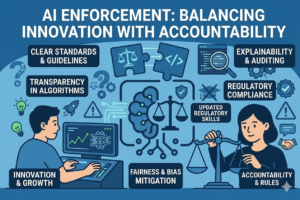
Artificial Intelligence (AI) is no longer a futuristic concept. It drives our cars, manages our money, and writes code. However, rapid growth brings serious risks, making AI enforcement critical to keeping technology safe, fair, and accountable.
Why We Need AI Enforcement Now
- Biased Algorithms: Unregulated AI can reinforce racial and gender biases in hiring or lending.
- Data Privacy Violations: Large language models often scrape personal data without user consent.
- Deepfakes and Misinformation: Manipulated media can destroy reputations and sway elections.
- Corporate Accountability: Tech giants often deploy AI systems before thoroughly testing their social impact.
Key Pillars of Effective AI Enforcement
1. Comprehensive Legal Frameworks
Governments must build clear, enforceable laws. The European Union’s EU AI Act sets a strong global standard. It classifies AI tools by risk level and bans unacceptably dangerous systems entirely.
2. Independent Auditing Bodies
Independent organizations must audit algorithms before public release. These third-party reviews look closely at code to find hidden biases, security flaws, and privacy leaks.
3. Stiff Financial Penalties
Regulators need real power to enforce rules. Big tech firms will only change dangerous habits if they face massive fines that hurt their bottom line.
The Enforcement Challenge
AI presents a unique challenge for regulators. Tech evolves fast, while laws take years to pass. If rules are too loose, AI can cause real harm. If rules are too strict, they can crush innovation and slow down progress.
The Path Forward
AI enforcement is not about stopping progress. It is about building a foundation of trust. True innovation can only thrive when users know the systems they rely on are safe, transparent, and fair. If you are planning to publish this online, let me know if you need help generating SEO keywords, creating a meta description, or matching a specific brand voice.